What happened
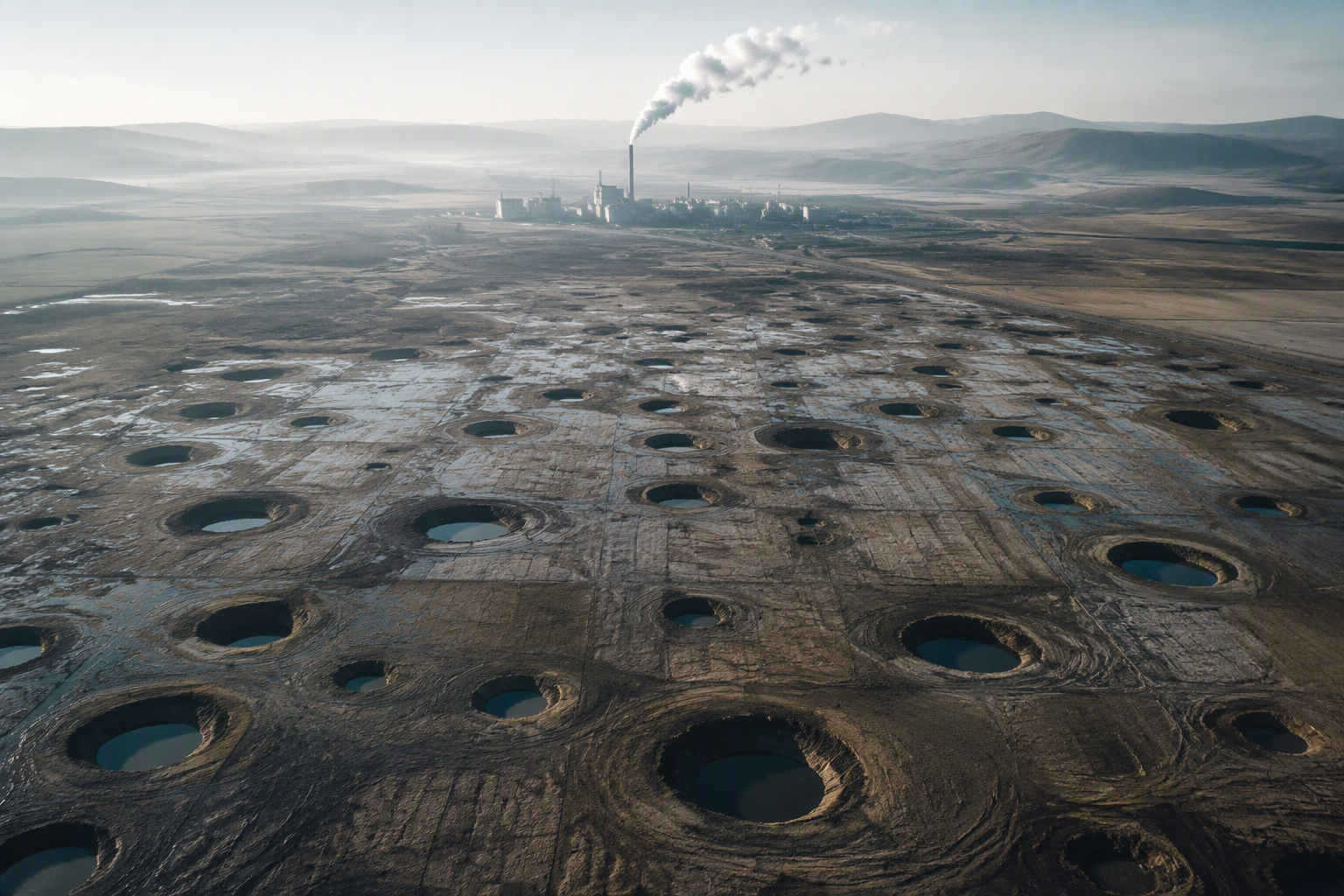
Members of 350 Turkey unfurled a banner reading "Climate Crisis Is Here" at a sinkhole site in Konya's basin region to emphasise how the climate emergency threatens Turkey's water supplies and agricultural land. The action was part of the "The Real Cause: Fossil Fuels" campaign.
According to the Sinkhole Sensitivity Map developed by Turkey's disaster authority AFAD, the Konya Closed Basin contains 739 registered sinkholes. Of these, 702 are located in Konya, 29 in Karaman and 8 in Aksaray. Since 2020, 126 new sinkholes have formed in Konya alone, added to a baseline of 576 previously recorded.
Research shows that sinkhole formation in the Konya Plain is closely linked to climate change, drought and uncontrolled groundwater extraction. Reduced rainfall and rising temperatures compound pressure on water resources, whilst excessive groundwater use in agriculture—much of it through unlicensed wells—accelerates aquifer depletion.
Why it matters
The sinkholes represent tangible evidence of a compound crisis affecting millions of people's livelihoods across Turkey. A researcher at Boğaziçi University stated that the formations are "the direct result of a two-sided water crisis": agricultural irrigation demand is met largely through unauthorised groundwater extraction, yet climate-induced rainfall decline simultaneously weakens natural aquifer recharge. The expansion of water-intensive crops such as maize has intensified this pressure.
The timing carries significance: as Turkey prepares to host COP31 in Antalya, the Konya Plain demonstrates that climate impacts are not abstract future scenarios but immediate threats to food security and water availability.
Background
Sinkholes form when groundwater extraction causes underlying aquifers to collapse, destabilising the surface above. The Konya Closed Basin is particularly vulnerable because it is a confined aquifer system with limited natural recharge capacity.
What's next
350 Turkey called on the government to accelerate the transition away from fossil fuels and implement a just transition to renewable energy, rather than continuing to support new coal and fossil fuel investments.