What happened
Türkiye’s Ministry of Environment, Urbanisation and Climate Change has completed the Anka installation in the COP31 Green Zone in Antalya. The 140-square-metre structure weighs 54 tonnes, of which 33 tonnes, or 60%, came from earthquake rubble collected in Hatay after the 6 February 2023 earthquakes.
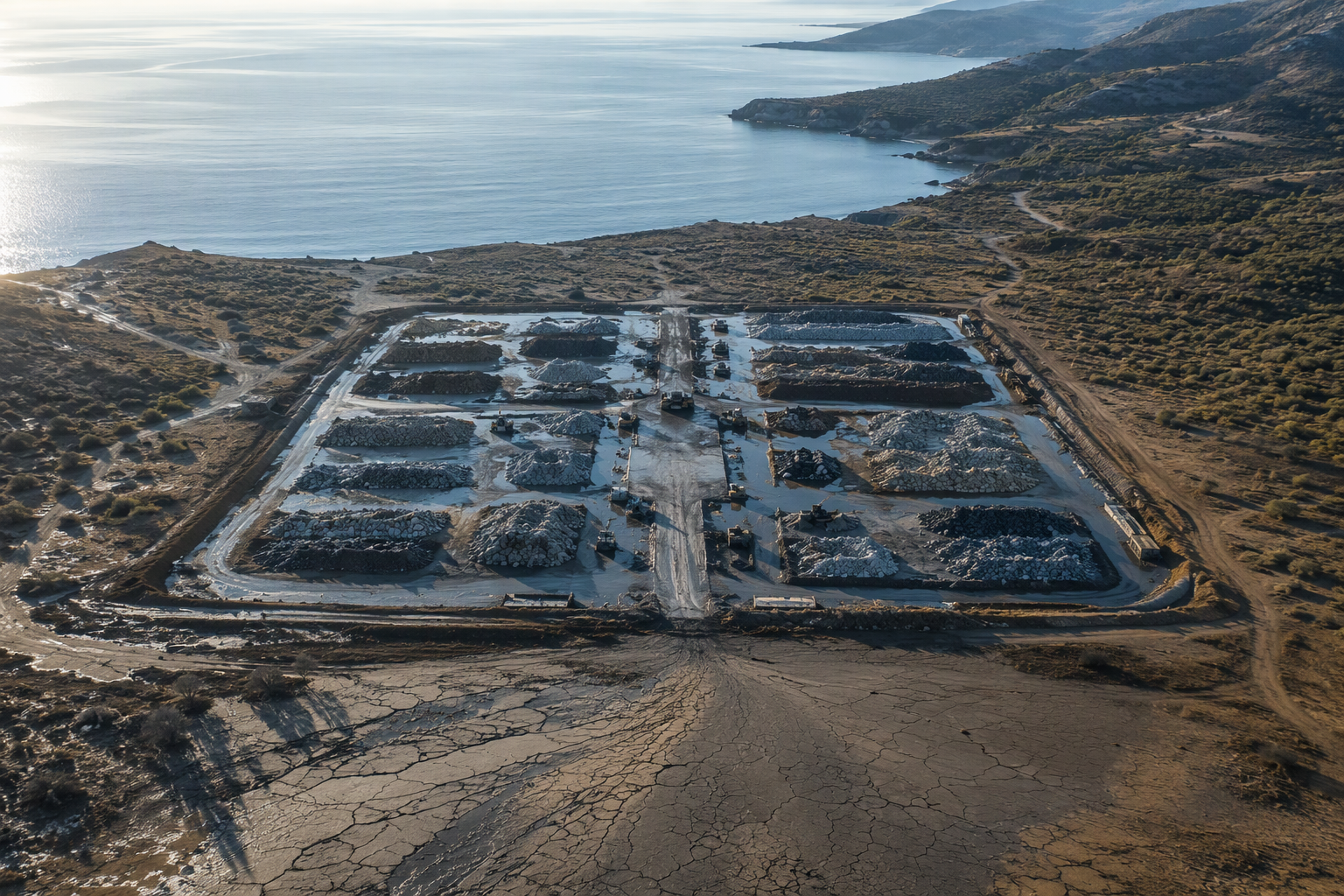
The ministry says material from the rubble was treated at Hatay’s demolition-waste recycling facility. Part was milled into powder and part converted into fine sand before being used in newly made concrete. Construction professionals assessing circular reconstruction approaches should note that the project applies recovered mineral material in a new structural installation rather than sending it directly to disposal.
A tracked robot used 3D concrete-printing methods to create the installation’s curved walls, seven twisted columns and benches on site. The process did not use conventional moulds, and the concrete-printing stage lasted seven days. Honeycomb-patterned roof panels were manufactured from discarded plastic.
The work forms part of the Rural Earthquake Recovery and Reconstruction Project, delivered by the ministry’s General Directorate of Construction Affairs with joint financing from the World Bank and the French Development Agency.
Why it matters
The installation is intended to feature Türkiye’s reconstruction work and its approach to climate-resilient urban development at COP31. Climate-resilient cities are among the 10 priority themes in the COP31 Action Agenda, according to the ministry.
For city authorities and built-environment organisations, Anka offers a visible case study in processing demolition waste into inputs for new construction. It also combines that material-reuse approach with additive concrete construction and recycled-plastic roof components.
The adjacent Resilient Cities Hub is planned to host projects from municipalities, relevant public bodies and private-sector organisations. Its subjects include adaptation to climate change, sustainable urbanism, disaster preparedness and the role of local government in climate action. The ministry says it will provide a setting for local authorities to share experience with international participants and develop collaborative initiatives.
Project context
Türkiye plans to present reconstruction in the 11 provinces affected by the earthquakes, including climate-resilient housing, within the COP31 area. Further project information is available from the Ministry of Environment, Urbanisation and Climate Change.