What happened
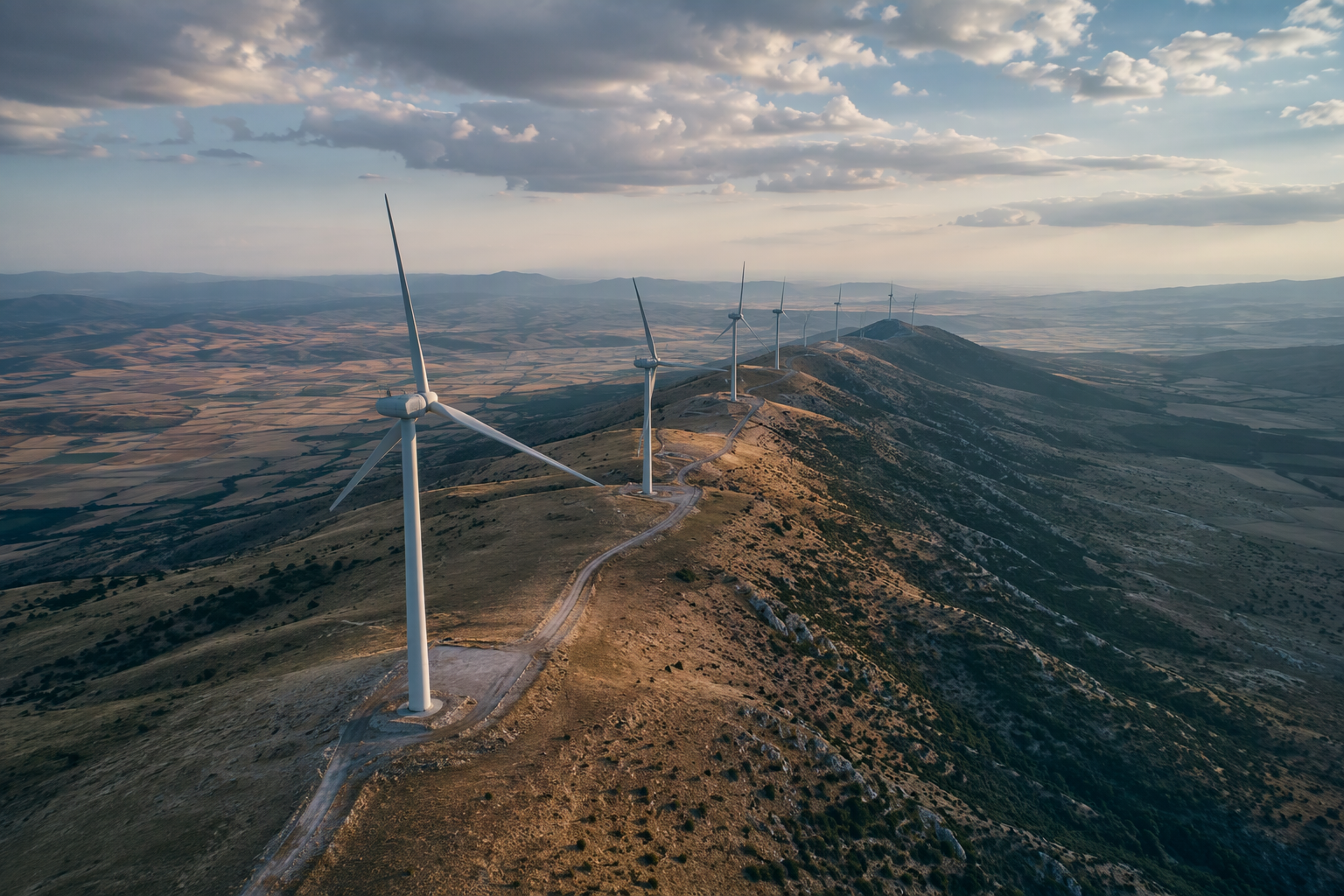
The Global Wind Energy Council (GWEC) and the Turkish Wind Energy Association (TÜREB) have published a joint declaration on expanding wind deployment, released in connection with COP31. The document, reported by Yeşil Ekonomi, sets out recommendations for governments and industry participants over the next decade.
It places global installed wind capacity at 1.3 TW at the close of 2025. On prevailing regulatory and investment assumptions, the declaration envisages capacity reaching 2 TW in 2029 and 3 TW in 2035.
GWEC’s accelerated delivery case puts cumulative capacity at more than 4 TW by 2035. That outcome would require coordinated action to stimulate new projects and remove obstacles to delivery, according to the declaration.
The organisations identify five broad workstreams: stable policy frameworks and bankable project pipelines; wind industries that benefit regional economies; innovation, standards and sustainable supply chains; closer incorporation of wind into power-system planning; and development of offshore wind.
Why it matters
The accelerated case requires annual wind investment to rise to more than US$500 billion over the coming decade, more than twice the current level stated in the declaration. It therefore shifts attention from capacity targets alone to the practical conditions for project execution.
Permitting, grid and storage infrastructure, affordable finance and supply-chain capability are among the areas highlighted by the two organisations. These are relevant to developers, manufacturers, network operators and financiers assessing the pace and investability of future wind build-out.
TÜREB president İbrahim Erden said wind could strengthen energy supply security, support electrification and improve industrial competitiveness in Türkiye. He also pointed to predictable policies, effective permitting, timely network and storage investment, and access to lower-cost financing as requirements for bringing forward further projects.
What to watch next
The declaration uses 2035 as the main point of comparison between the current 3 TW trajectory and an outcome above 4 TW. Businesses with exposure to wind should track whether policy signals, permitting processes, grid investment and financing conditions improve sufficiently to support the accelerated case.
GWEC and TÜREB are calling for closer cooperation among governments, industry and financial institutions. Their stated objective is to address implementation constraints while strengthening local supply chains and expanding access to clean electricity.