What happened
Türkiye’s Ministry of Environment, Urbanisation and Climate Change has released a General Directorate of Meteorology analysis covering global and national temperature and drought conditions from 2016 to 2025. The assessment identifies 2024 as Türkiye’s hottest year on record, with a national annual average of 15.6°C, and flags 2025 as its driest year since 1964.
For sustainability teams, the release supplies updated national climate-risk context rather than a stated new business obligation. Companies with operations, assets or supply chains exposed to Türkiye should consider the findings alongside their heat, water and operational-resilience assessments.
The ministry said Türkiye’s average temperature was 15.1°C in 2023, approximately 1.2°C above the 1991–2020 normal. That year ranked third in the national record. Across the full 2016–2025 period, the country’s mean temperature was 14.9°C.
In 2025, annual precipitation across Türkiye was 27.6% below normal, according to the analysis. Parts of the South-eastern Anatolia region experienced rainfall shortfalls of more than 60%. The national maximum temperature recorded that year was 50.5°C in Silopi, in Şırnak province, on 25 July.
Why it matters
The assessment links the national results with rapid warming in the global climate system. It says that, apart from the Black Sea region, observed average temperatures in every Turkish region during 2016–2025 exceeded both optimistic and pessimistic scenario projections.
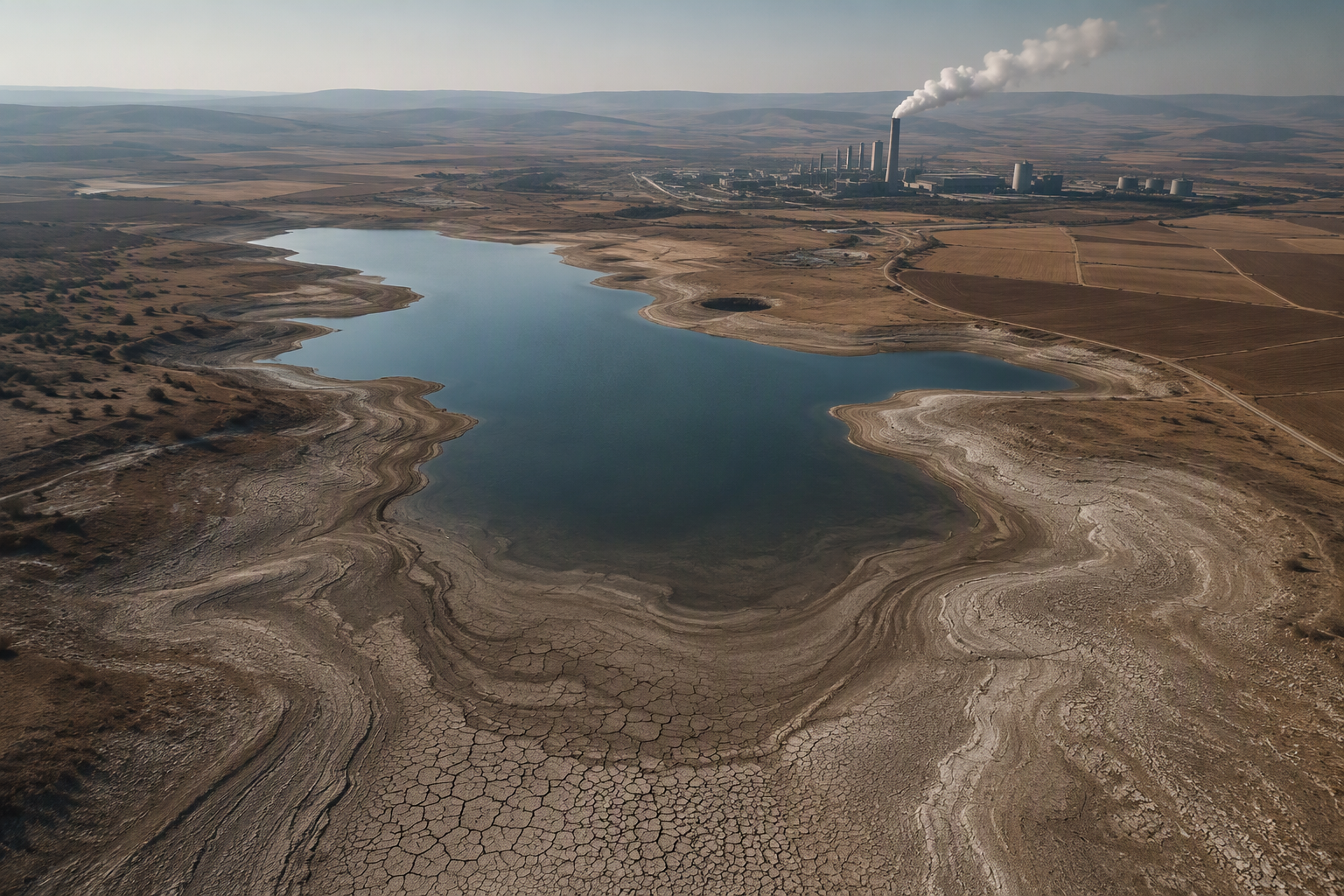
The combination of elevated temperatures and substantial rainfall deficits is relevant to water availability, workforce heat exposure and disruption risks. The ministry particularly highlights the drought period from 2020 to 2022 and the conditions seen in 2025.
Global context
The ministry’s analysis describes 2016–2025 as the warmest ten-year interval globally. It cites World Meteorological Organization assessments under which every year from 2015 through 2025 ranks among the eleven warmest recorded. Globally, 2024 had an average temperature of 15.1°C, while Copernicus/ECMWF and NOAA datasets placed 2025 third.
The ministry also reports that global ocean heat content reached its highest level in the modern observational record during 2025.
What to watch
No implementation timetable, reporting requirement or support measure is set out in the announcement. The ministry says it will continue pursuing a climate-resilient Türkiye. The underlying findings were published by the Ministry of Environment, Urbanisation and Climate Change.