What happened
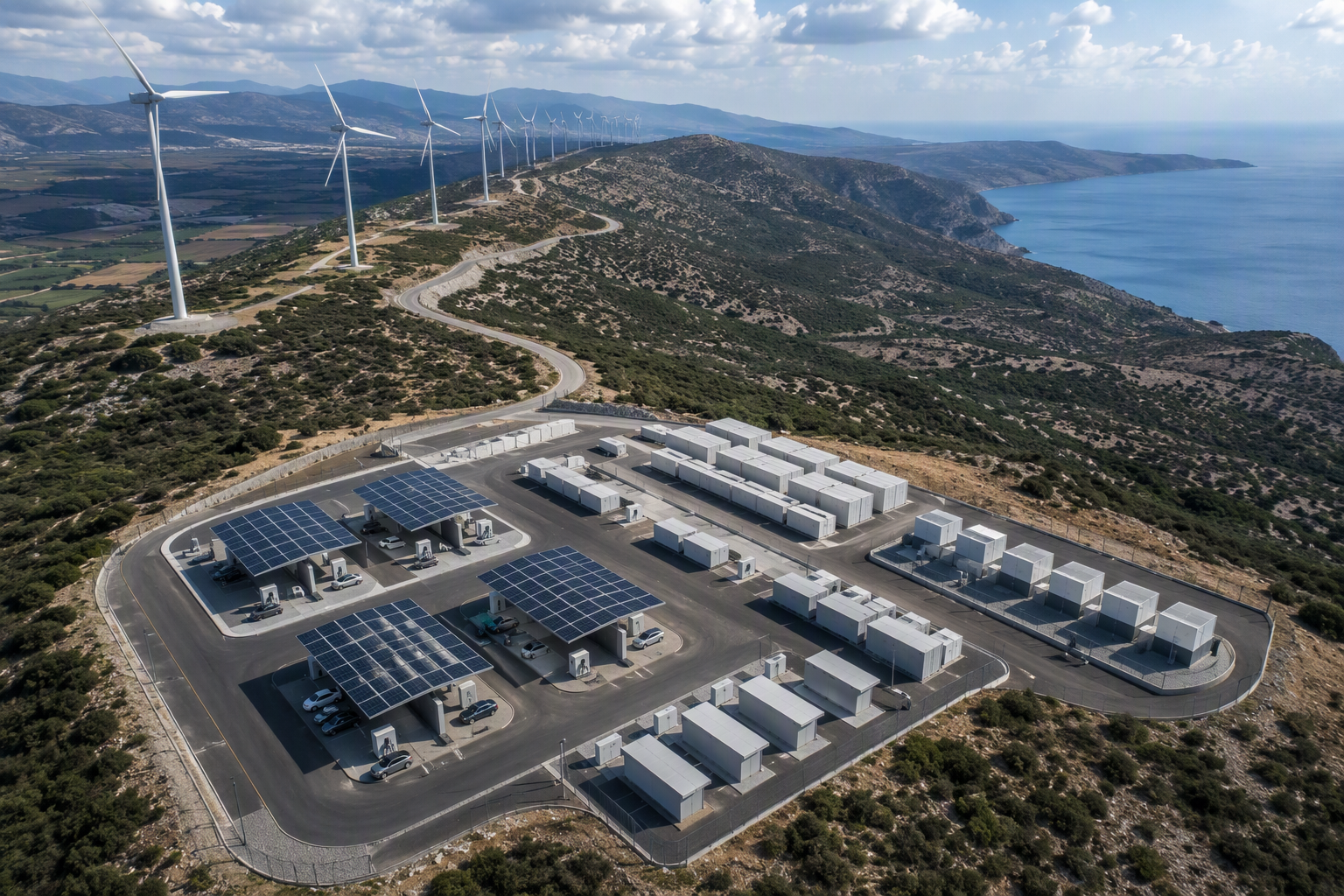
Turkey’s Energy Market Regulatory Authority has introduced a rule enabling integrated electricity storage at charging stations to support vehicle charging at power levels higher than the station’s contracted grid capacity.
Previously, the installed capacity of storage integrated with a charging station was capped at the contracted capacity of the consumption facility. Under the revised approach, a storage facility may discharge at a higher level where it also supplies the charging units.
The arrangement is subject to grid-protection requirements. Operators must install automatic power-control and disconnection systems. These must stop electricity from being fed into the grid and ensure that electricity taken from the grid does not exceed the contracted capacity.
Why it matters
The rule gives charging-network operators another option where obtaining additional grid capacity would require costly network or transformer works. Storage can charge during periods of lower demand, then help meet peaks in charging demand while the site’s grid draw remains within its contracted limit.
This could be relevant at motorway stops, rest areas, fuel stations and heavily used commercial sites, where several vehicles may need high-power charging at the same time. Operators can assess storage investment alongside the cost and availability of a larger grid connection.
Background
High-power charging infrastructure requires significant instantaneous electricity demand. At locations where the existing connection cannot meet that demand, storage may provide additional power during busy periods without increasing the site’s agreed grid capacity.
The measure is intended to support wider deployment of high-power charging equipment while making greater use of existing distribution infrastructure.