What happened
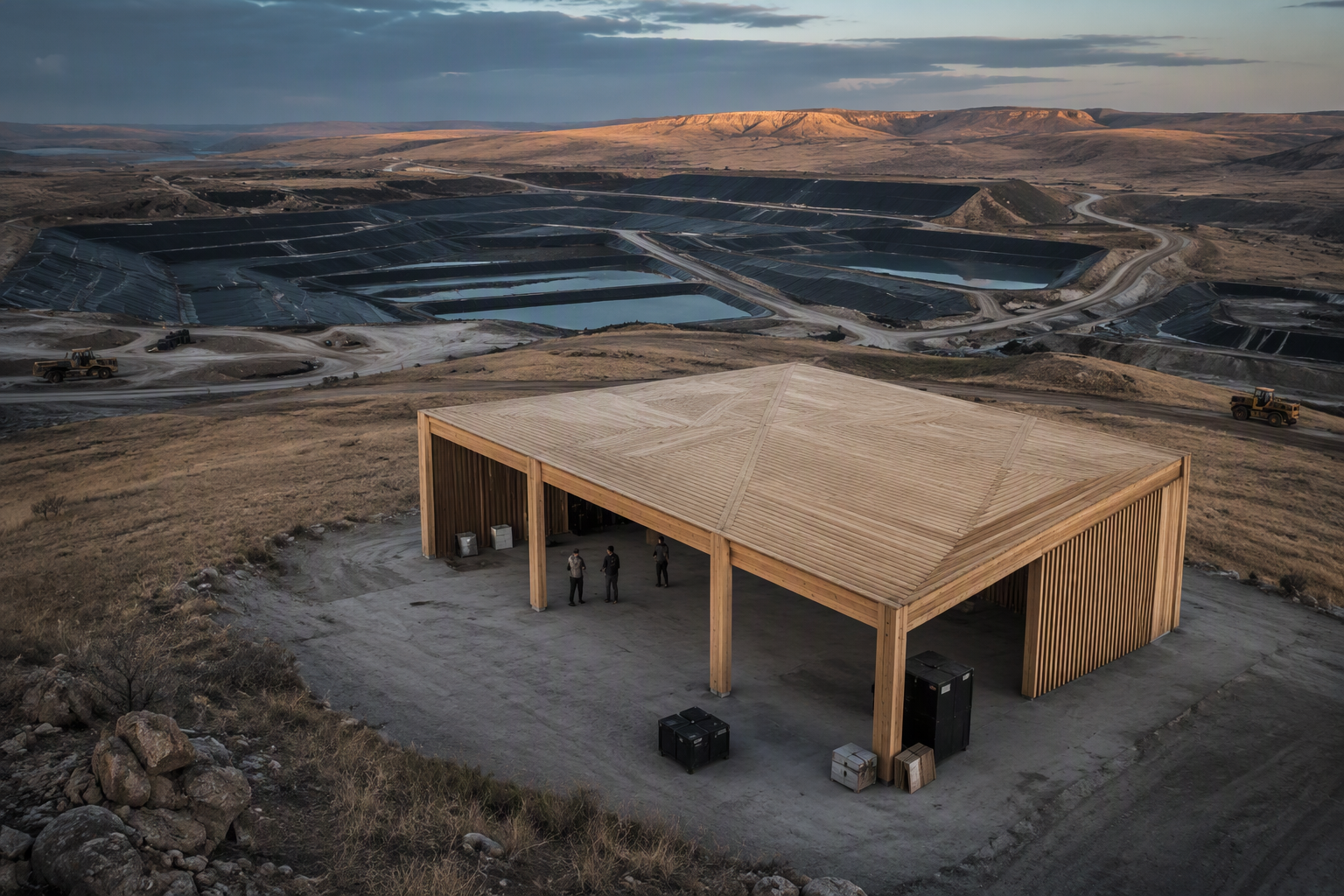
Yano Aoyama Architecture Design has designed the Onodatesho Pavilion for the 76th National Tree Planting Festival in Ehime, Japan. The 80m² structure serves as a ceremonial space for the Emperor and Empress during the event.
Its principal material is cross-laminated timber, or CLT, made from cedar and cypress sourced in Ehime. The pavilion uses panels measuring up to 12 metres long and 2.3 metres wide, among the largest that can be transported by road in Japan.
The design retains the panels at their full size where possible rather than dividing them into smaller pieces. Its main parts are joined with bolts so they can be separated after the festival without damaging the timber. CLT offcuts from fabrication were incorporated into secondary elements, including steps for the stage.
Once the event ends, the pavilion will be dismantled. The main CLT components are intended to be remade as specially designed furniture for schools in the Ehime area.
Why it matters
The project treats dismantling and later use as design requirements, rather than an end-of-life issue. For timber construction professionals in Türkiye and Europe, it illustrates how temporary structures can preserve the value of engineered-wood components through transportable dimensions, repeatable connections and a defined subsequent use.
It also shows a route for reducing material losses in temporary projects: retaining large panels, using fabrication remnants within the build and planning a second application before construction begins. The source does not report any regulatory requirement or commercial programme linked to the project.
Background
Japan’s National Tree Planting Festival has been held annually since 1950 to promote forest conservation and sustainable use. A new onodatesho pavilion is produced for each event and is normally dismantled afterwards.
The 2026 pavilion uses three asymmetrical timber planes arranged at differing angles. One plane leans about 10 degrees towards the audience and is supported by slender steel rods. The project was developed with local carpenters, CLT producers and technical drawing teams.
What's next
Following the festival, the structure is scheduled for disassembly and its principal timber panels are planned for reuse in school furniture across Ehime.